Updated on
September 24, 2026
Learning through play
Why is learning through play such an important aspect of childhood and education? Find out how you can promote playfulness in your classroom.

Updated on
September 24, 2026
Why is learning through play such an important aspect of childhood and education? Find out how you can promote playfulness in your classroom.
Learning through play is a teaching approach where children build knowledge, language, social understanding and physical control through purposeful play. Adults support this by noticing what children do, modelling useful ideas and extending the learning. Montessori (1912), Piaget (1952), Froebel (1826) and Vygotsky (1978) all saw play or active experience as central to early development. Current evidence also warns that novice learners should not be left to discover every idea alone.
Learning through play includes both planned and spontaneous activity. Children explore, imagine, move, talk and interact with others. In this way, they build knowledge, practise skills and make sense of the world.
In a Reception classroom, a shop role-play area can teach counting, turn-taking and new vocabulary when the teacher adds price labels, models phrases such as "more than" and "change", and asks precise questions while children stay in role. This balance of child agency and adult guidance makes play more than a pleasant activity: it becomes a planned route into curriculum knowledge.
Play is a strong driver of development and helps shape key skills in the early years. For more on this topic, see Creative play. Understanding this active role can change how caregivers and educators approach childhood education.
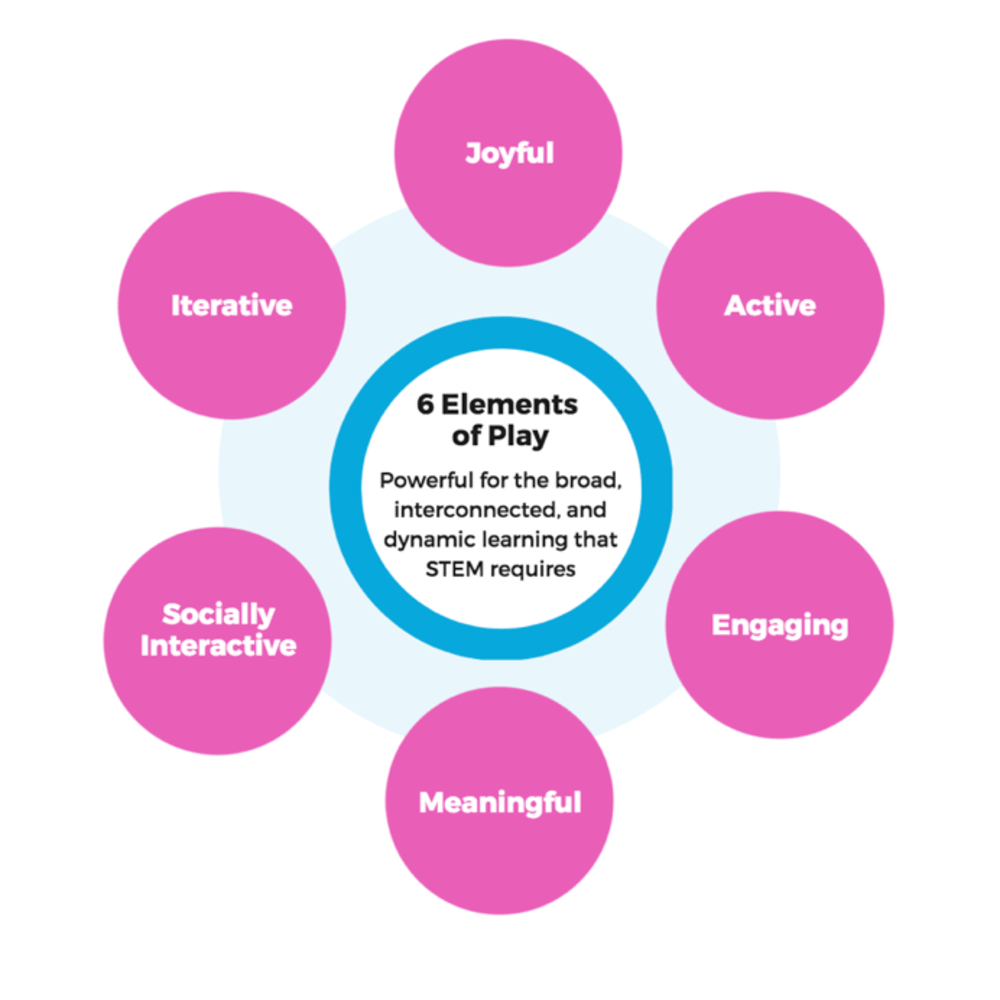
Play is not just a pastime; it is a foundation for learning. For more on this topic, see Characteristics effective learning complete. Different types of play, such as imaginative play, constructive play, and games, each support a child's growth in their own way. When play includes freedom, engagement, and social interaction, it creates a setting where learning can grow naturally.
Play links with learning, say Montessori and Reggio Emilia frameworks. Readers see how play improves learning and development (Whitebread et al., 2012). Teachers can use play in the classroom, note researchers (Lillard, 2017; Gray, 2011).
Play builds social, cognitive and emotional skills when children have something real to explore. In animal research, rough-and-tumble play increased brain-derived neurotrophic factor, or BDNF, gene expression in brain areas linked with emotion and higher thinking (Gordon et al., 2003). This supports rich play, but teachers should treat it with care. It is neuroscience evidence from juvenile rats, not direct proof that every classroom play activity grows a child's brain.
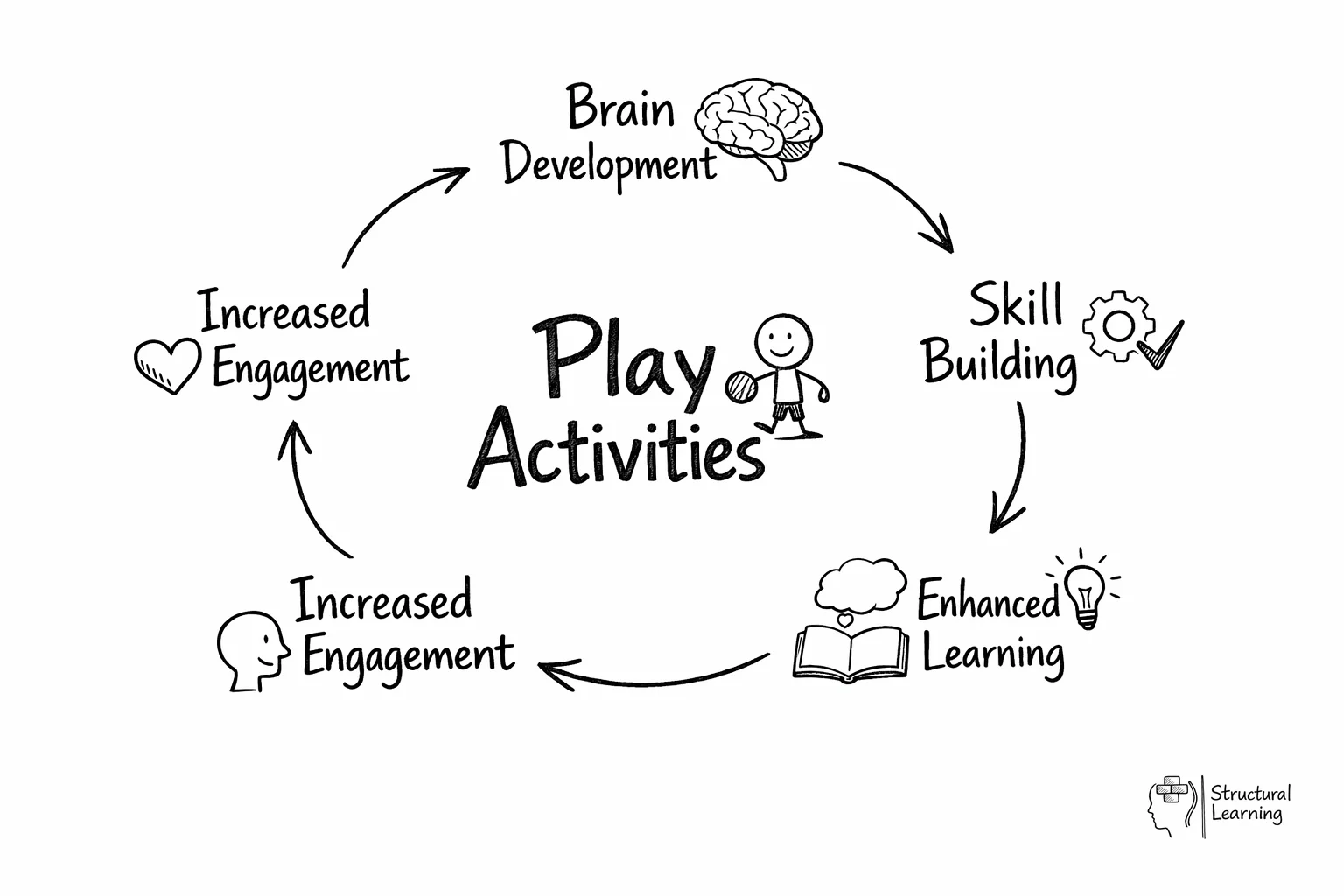
Play is an important part of child development. It helps children build social and cognitive skills. Through active play, children make sense of their world, grow emotionally and gain confidence. As they play, they ask questions, explore ideas and learn more deeply.
Play helps brains develop, triggering protein production for neuron growth (Brown & Smith, 2001). Play-based activities boost self-regulation skills and attention (Lee & Patel, 2015).
Children practicing play develop a myriad of critical life skills:
Each of these skills prepares children for future success, fitting into both individual and cooperative learning settings. Essential skills gained through play lay the groundwork for a bright academic and social future. See also: Engaging young minds through mathematical.
Play helps learners gain skills and knowledge via activities like games (Vygotsky, 1978). It mixes freedom, involvement, and socialising, so learning happens naturally (Piaget, 1967). Play develops growth more than simple fun (Bruner, 1972).
Play actively involves learners and supports skill growth beyond preschool. It uses curiosity, which can make the move into formal school easier. Studies (e.g., Hirsh-Pasek et al., 2009) show that enjoyable play builds skills.
Guided play, especially with peer work, can match traditional teaching. Policy and practice need to work together so play works well (e.g., Weisberg et al., 2013). This gives educators a clear, shared language.
Play differs from work because learners enjoy it and have control (Vygotsky, 1978). Planned tasks can support learning, but play also builds creativity and problem solving. Cultures view play and work in different ways (Rogoff, 2003).
Actions that help families may count as work in one culture, but as play in another. This can make play hard to define (Lester & Russell, 2008). If we focus only on work, we may undervalue play as a learning tool (Hirsch-Pasek et al., 2009).
Play helps learners build skills such as creativity (Vygotsky, 1978). It supports problem solving and independence as learners use what they already know. Play also builds both academic skills and social skills (Piaget, 1951).
Unlike set tasks, play gives learners internal control, flexibility, and motivation (Shayer & Adey, 2002). Learners use their senses to explore, which builds imagination and involvement. In schools, play supports teamwork and enriches learning (Moyles, 2010).
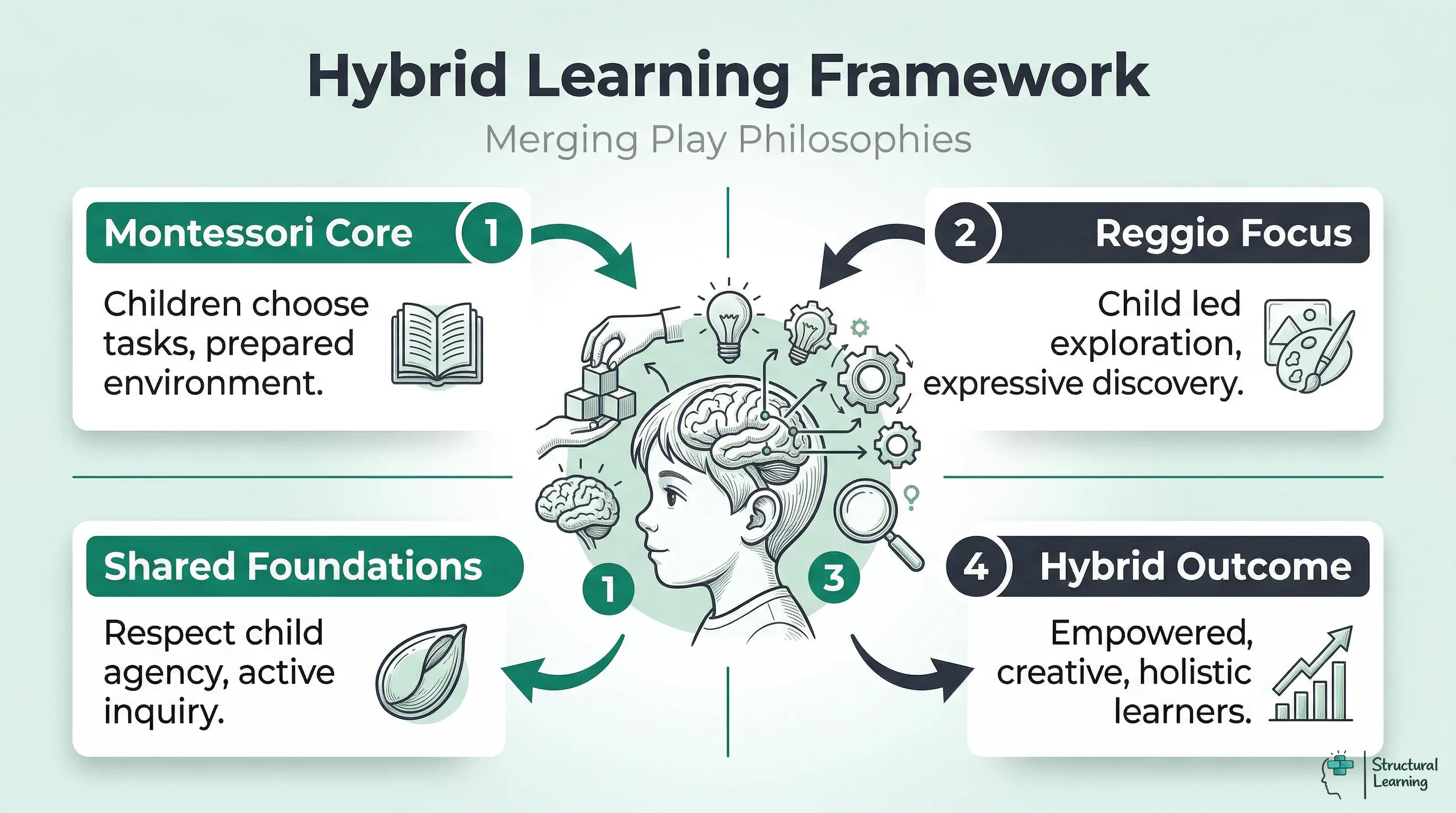
Montessori encourages children to guide their own learning. Reggio Emilia focuses on exploration. Researchers say that using both approaches can create balanced learning. Both frameworks see learners as active builders of knowledge through play.
Educational frameworks guide learning by giving teachers clear methods. These methods shape how children gain different skills. They often draw on theories from well-known educators and psychologists.
Jean Piaget focused on play-based stages of development. He showed that children play an active role in constructing knowledge. This idea strongly shapes early childhood education programmes, where learners explore through hands-on activities.

Friedrich Froebel saw play as serious work. This view matches modern thinking about the value of play in child development. His ideas helped build the case for play as essential for growth.
Recent theories suggest that social contexts matter in learning. Education should connect with each learner's life. Vygotsky (1978) said teachers should build on what learners already know.
Teachers can then challenge learners within a supportive zone. Studies show that giving learners choices boosts motivation and agency, meaning their sense of control. This builds positive attitudes and engagement.
Constructivist learning says learners build knowledge through experience. Modern teaching methods use this idea (Piaget, 1972). These methods blend to aid diverse learners (Vygotsky, 1978). Playful learning, for example, supports this, making learners active creators (Bruner, 1966).
Project-based learning can show whether these methods work. It can be hard to evaluate combined teaching because several approaches are used at the same time. Evidence suggests constructivism is key to education. In constructivism, learners actively use materials and build knowledge (Hmelo-Silver et al., 2007; Barron & Darling-Hammond, 2008).
The Montessori Method focuses on meaningful play, where children choose their own activities. This freedom builds autonomy and engagement, which are key parts of learning. In Montessori classrooms, meaningful play grows naturally instead of following a strict script, so children often enjoy it more. When children choose how to use learning materials, they can build focus and self-control.
Montessori learning materials are sensory and interactive, so they help children prepare for independent living. Through hands-on manipulation, they support fine and gross motor skills. Bringing play into this work creates a setting where children can experiment. As children use mental rules during play, their social and collaborative skills grow and prepare them for future social interactions.
Reggio Emilia uses learner interests to guide the curriculum. This approach encourages exploration and keeps learners actively engaged (Edwards et al., 1998). As children work together and talk, they build social skills through natural learning. Learners develop at their own pace, without fixed steps (Malaguzzi, 1993).
Reggio Emilia gives great value to the environment. It sees the classroom as the "third teacher." Well planned spaces can spark learners' creativity and exploration.
This supports emotional development and cooperative learning (Edwards et al., 1998). The approach also supports whole-child development by linking different areas of growth (Vecchi, 2010). It gives value to learner interests and interactions too (Rinaldi, 2006).
Researchers such as Vygotsky (1978) show that play helps learners develop. Teachers use play-based learning so learners can explore ideas. Hands-on activities, games, and imagination help children build skills (Piaget, 1967). Play also supports creativity and self-regulation (Singer & Singer, 2005).
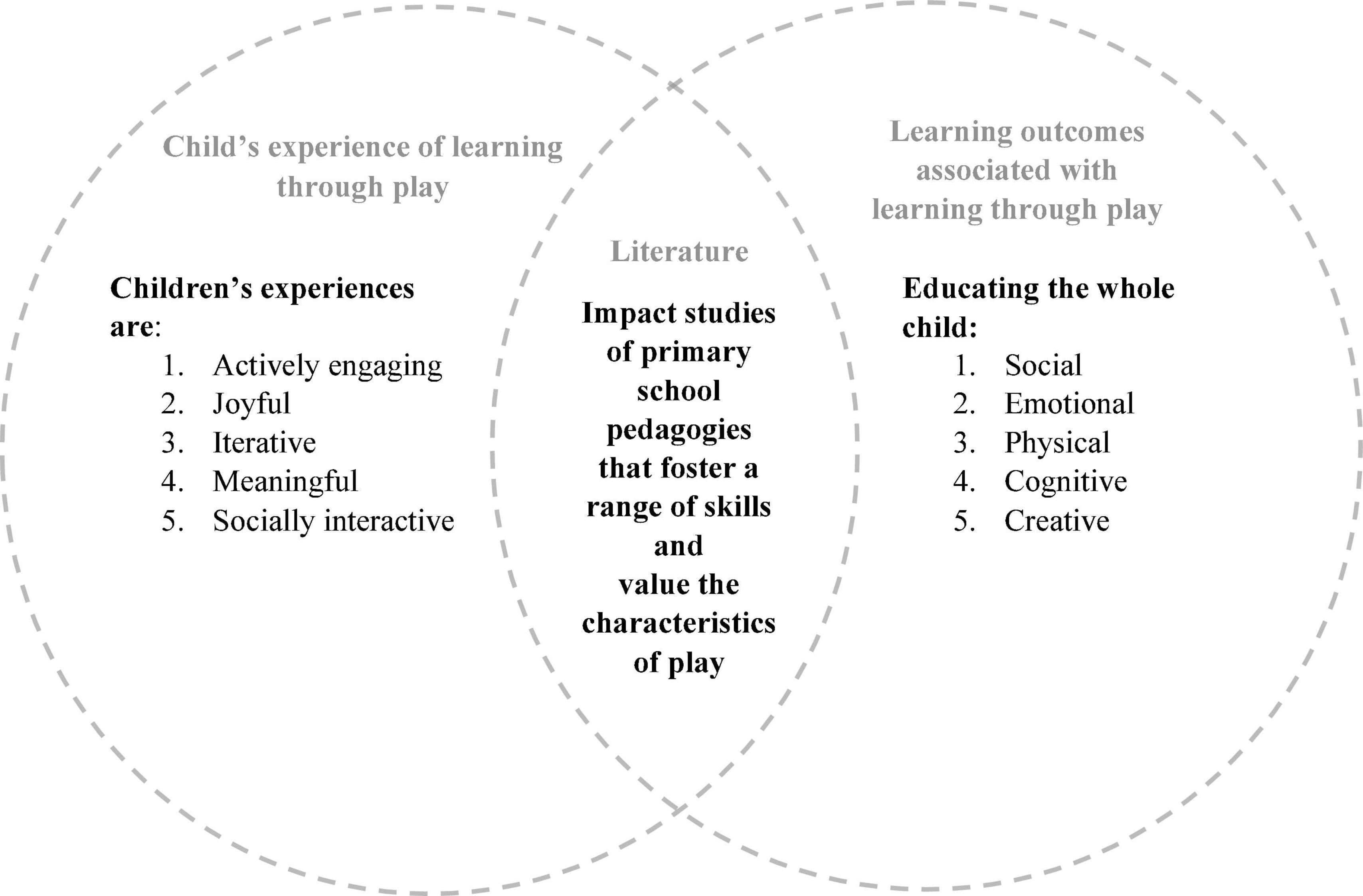
Play-based learning builds key skills in the early years. It is fun, meaningful, and social, so learners take an active part. Play supports thinking, social, emotional, creative, and physical growth. Jean Piaget showed how children learn through play.
Parker and Thomsen linked playful teaching to constructivist ideas, where learners build meaning through experience. These methods support both learner-led and teacher-guided learning. Play also builds socio-emotional skills in early education. It improves maths skills when compared with traditional teaching.
Play gives children a base for learning, creativity and knowledge. Play activities build language skills, such as vocabulary (Vygotsky, 1978). They also support imagination and problem solving.
Play supports brain growth and cognitive function, which means how learners think and process information (Diamond, 2007). Sociodramatic play, where children act out roles, helps learners build social skills and understanding (Lillard et al., 2011). A lack of play may hold back learning.
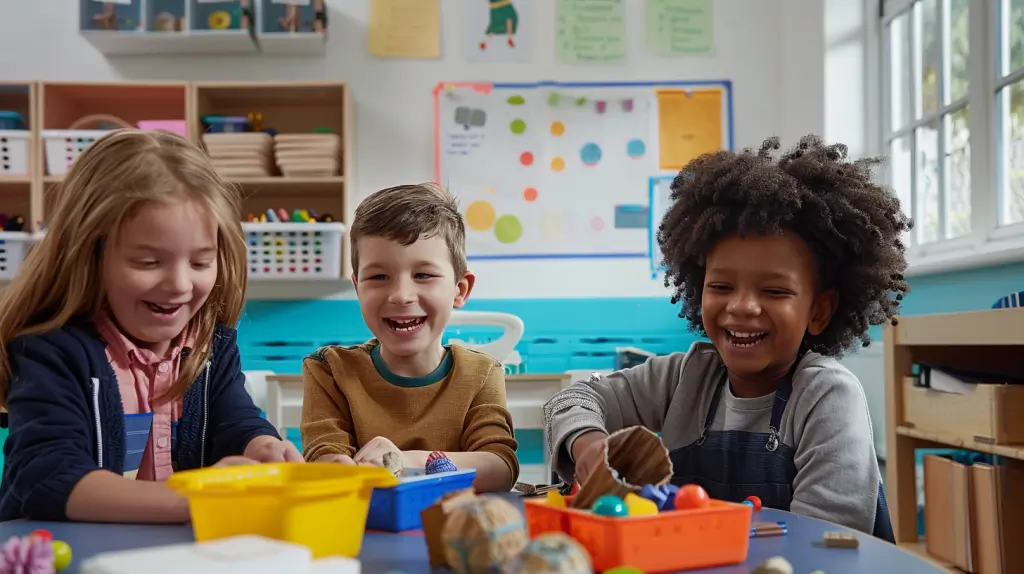
Play builds social skills by supporting cooperation and empathy. Interactive play with peers helps children gain confidence. They learn to try new activities and work together in creative ways.
The benefits of play for social skill development are rooted in evolution. These skills help children adapt socially and can support helpful behaviours in adulthood. Unstructured play, such as pretend play, is often more valuable for social skill development than structured activities.
This kind of play gives children more autonomy, or choice, in what they do. Schools that use play-based learning support social skills as well as cognitive, emotional, and physical skills. This helps create a complete learning environment.
Play helps learners handle stress and feel happier. In pretend play, learners can work through worries and feel emotionally safe (Singer & Singer, 1990). Sociodramatic play, where children act out roles and stories, builds story skills and emotional understanding (Vygotsky, 1978).
Play also supports sharing, cooperation, and strong friendships (Piaget, 1951). In school, it builds skills such as problem solving, which matter for emotional growth (Bruner, 1972). It also helps learners name and manage feelings, which supports emotional resilience (Bowlby, 1969).
Teachers can use guided play (Fisher et al, 2011) to meet curriculum aims, allowing learner choice. Setting up learning areas, using games, and dramatic play help reinforce concepts. Balancing guidance with learner interest is key (Zosh et al, 2018; Weisberg et al, 2016).
Play or first-hand experience has a major role in children's learning. Play supports, stimulates and motivates children to develop a variety of skills. Children use all of their senses during play, they learn to convey their opinions and emotions, discover their environment, and connect their pre-existing knowledge with new knowledge, skills and abilities. Following are some of the most effective ways to incorporate learning through play in a classroom.
This is an easy way to include play into a classroom's everyday routine. Whether the collection of boxes on a shelf or traditional play centres (blocks, dramatic play and sand etc.), it is the first step to have the essential resources available to add more play into the class routine. Teachers can add things like blocks, puppets and puzzles in these centres and connect these to classroom learning.
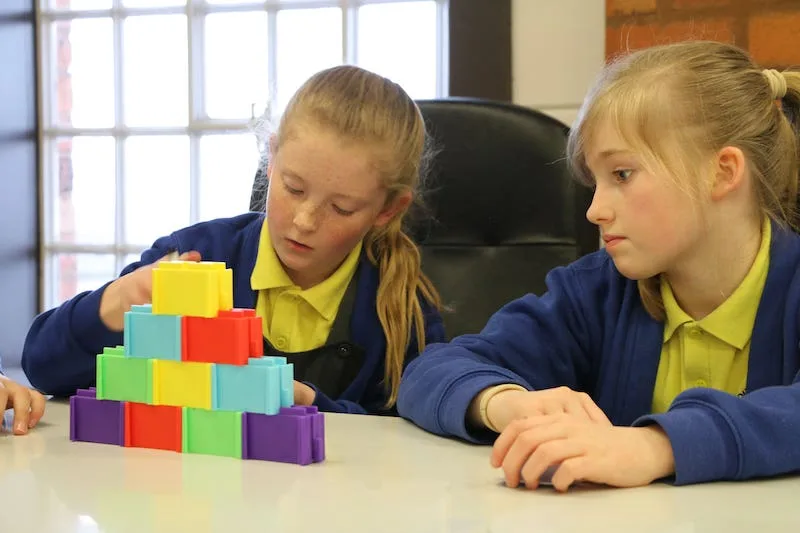
Young learners learn by doing as they are concrete learners. This makes play a powerful tool! It is also suggested to use manipulatives to teach new concepts. For example, Letter tiles can be used to teach spelling and toy cars can be used to teach about sounds.
When teachers take learners outside the classroom, they show great interest in learning. For example: For Science lessons, children can collect seeds, grass, flowers, to learn about their characteristics. Teachers can also take learners outside to teach about seasons of the year.
Instead of retelling a story, teachers can act it out to increase learners' interest in the lesson. learners show great engagement and love it when they are chosen to be actors. learners can learn concepts such as sentence structure or social problem solving through role-plays or acting it out in the classroom.
Instead of sharing the title of the new topic, teachers can encourage learners to visualize through their imagination. For instance, to teach about the life under-water, a classroom can be changed into an ocean! Pictures of underwater plants and animals can be displayed around the classroom and learners can pretend to be scuba diving or exploring new things.
Play helps learners build skills lessons sometimes skip. It develops creativity, thinking, and social skills alongside knowledge (Singer & Singer, 2005). Play's fun nature boosts recall and drive, improving learning experiences (Lillard et al., 2013).
Research shows that play-based learning can lead to better results than traditional methods in kindergarten, especially in mathematics. Guided play uses structured activities, such as card and board games, to focus on specific skills and improve learning. This approach can match conventional programmes and sometimes do better than them.
When educators combine free choice with peer learning, they balance structure with exploration. Play also builds a range of developmental skills. It presents learning in a fun and interactive way.
Active, learner-led learning is important in early education. Through play, children grow academically and socially (Vygotsky, 1978). For example, playful shopping can build literacy, maths and social skills. This can also improve results (Bruce, 2021).
Organised play builds negotiation and problem-solving in kindergarten (Piaget, 1967). Games add fun, give children short breaks, and support learning. Play with varied materials also builds exploration and imagination.
When teachers include play in early math education, learning becomes part of the game itself. Learning through play can build mathematical skills well, but it has been studied less than traditional methods. Research shows that play-based interventions lead to positive math outcomes and can sometimes outperform structured programs.
Play often includes joy, meaningful engagement, and social interaction. These features fit well with methods that build cognitive and practical math skills. Activities such as board games help children engage with math concepts in playful contexts, giving them a richer learning environment than traditional worksheets.
The main challenge is not proving that play is pleasant; it is showing what was learned. Time pressure, curriculum coverage and limited space can push teachers back towards worksheets. Leaders can defend continuous provision by linking each area to intended learning, adult prompts, vocabulary, observation notes and next steps, so play produces evidence for curriculum conversations rather than loose activity (Parker et al., 2022; Skene et al., 2022).
Defining play is not simple. Educators and researchers disagree about its key features, which makes it harder to build a clear base for play-based learning. Many people see play as less serious, so schools may find it harder to include.
Schools often favour fixed curricula and attainment targets, which can push play-based approaches aside. This can create a gap between teachers valuing play and using it in daily teaching. Accountability pressures or limited resources may explain this difference.
As a result, teachers may believe in play-based learning but return to traditional methods. This gap can reduce chances for growth in early literacy, language, mathematics, and socio-emotional skills.
The lack of continuity in pedagogies, or teaching approaches, between preschool and early primary years often stands out. Teaching can vary a great deal across these settings. Early childhood education covers ages zero to eight, including both preschool and school contexts.
Yet these learning environments can feel very different. A pushdown curriculum brings more didactic learning into preschool, where adults teach more directly. This can clash with the playful methods often used in early childhood education.
In an ideal system, strong early learning principles would move up into primary school. This transition needs shared responsibility among early childhood stakeholders. However, policy and research often focus on preschool settings. This can create challenges for primary schools.
Teachers' beliefs and daily play-based learning often differ. The practical solution is a shared assessment frame: learning intention, type of play, adult move, vocabulary heard, evidence observed and next step. This gives teachers evidence they can use in planning, SENCO discussions and Ofsted curriculum conversations, without turning play into a worksheet trail (Parker et al., 2022; Skene et al., 2022).
NAEYC supports play in education through suitable methods. Miller and Almon (“Crisis in the Kindergarten”) say that less play harms learning. Moss’s research connects early years and compulsory education.
He urges policymakers to recognise play’s key role. Good policies must focus on learners’ needs, including play. Educators and researchers agree that play matters, but policies often ignore it.
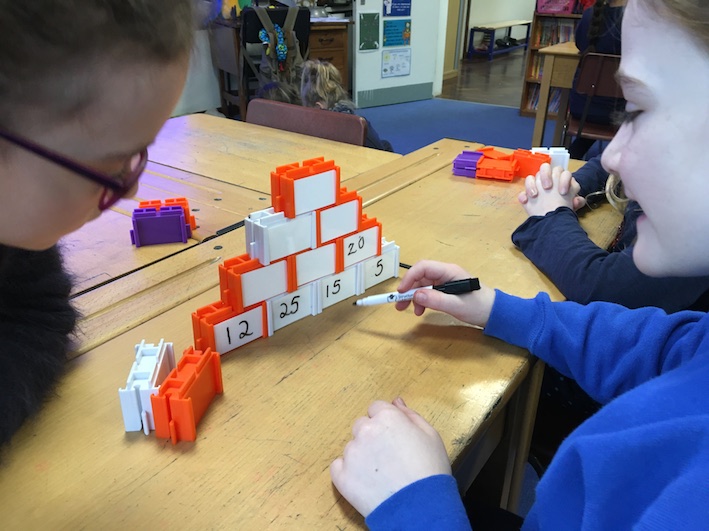
Teachers serve as facilitators who create rich play environments and guide learning through strategic questioning and observation. They must balance providing structure with allowing child-led exploration, knowing when to intervene and when to step back. Effective educators use play as a tool to assess learning, extend thinking, and scaffold new concepts.
Educators shape how play-based learning works. They give structure through a mix of teacher-guided and learner-led activities. This supports learner agency, as children have some control over their learning.
During play, educators add prompts and ask questions, especially in mathematics, to guide problem-solving. By watching children's progress, they can adapt activities to each child's needs. A strong grasp of educational concepts helps them support learning through play.
When educators value this approach, children can learn more. A positive attitude also supports learning gains.
Play spaces should act as a third teacher: ordered enough for children to find resources, but open enough for them to combine materials in new ways (Edwards et al., 1998). Inclusive provision needs quiet sensory areas, accessible loose parts, outdoor movement, visual prompts and adult language support. Observation helps teachers notice what learners return to, what they avoid and which adaptations will help SEND learners join the play meaningfully.
Child-led play helps learners practise sharing and turn-taking, which are key social skills. It also helps them manage frustration, so they interact better with peers (Vygotsky, 1978). In self-directed play, learners build their schemas, or mental patterns for understanding the world. This link between thought and feeling supports brain development (Piaget, 1951).
Teacher-led play connects activities to concepts, much like inquiry learning (Bruner, 1966). Through interaction, learners build vocabulary and language. Play is also more enjoyable and fits how learners naturally learn (Sylva et al., 1976).
Play-based learning supports development by helping learners build content knowledge and social skills. This approach is rooted in Lev Vygotsky's model of scaffolding, with educators giving feedback during play. Scaffolding means giving support that helps learners move to the next step.
Real-life and imaginary play can stretch children's cognitive development. Teachers can strengthen play-based, hands-on tasks with sensitive intervention. This works best when it fits teachers' beliefs and daily teaching. Both can shift because of pressure and resources.
Educators need to understand these elements. This helps them make learning through play more useful in childhood education settings.
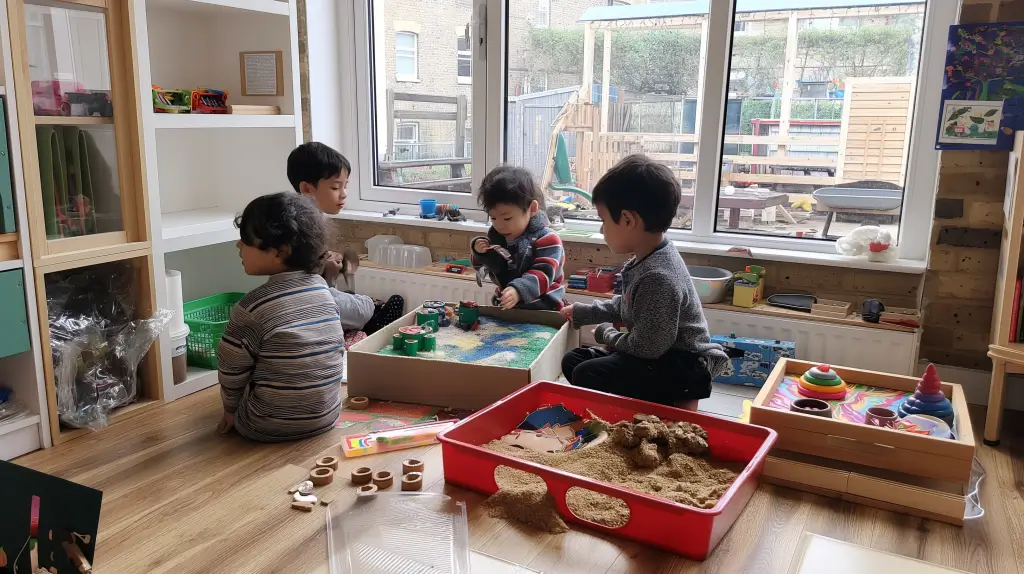
Parents and communities can support play-based learning by offering rich play experiences at home. They can also speak up for play-centred approaches in schools. Parents can create play-friendly spaces, join in meaningful play with children and work with educators to reinforce learning. Community resources such as libraries, museums and parks can also extend play-based learning opportunities.
Parents improve play-based learning by actively engaging with learners. This strengthens bonds and gives insights into behaviour (Vygotsky, 1978). Parents may spot delays early. Community resources boost programmes and help learners develop skills (Rogoff, 2003; Lave & Wenger, 1991).
At home, parents can support play-based learning by joining in activities with their children. Open-ended play, such as dress-up clothes, building blocks, sand or natural materials, lets children use their creativity. Choice in play is important for child development because it supports social skills, content knowledge and a positive attitude to learning. By supporting play at home, parents help their children's emotional and social growth.
Communities support play by offering spaces and resources. These boost learners' problem-solving, creativity, and language. The LTP framework helps teachers add play to lessons. Resources for parents and teachers improve how play benefits learners.
Play stimulates protein production, which is vital for learning and memory (Scientific research). Quality play helps learners build stronger executive skills and better social skills. (Studies show).
Play improves academic results. Neuroscience research confirms that play activates many brain areas at once, which boosts learning.
Learning through play helps children develop as they interact with people, objects and ideas. Teachers need to match play activities to each child's stage of development. The same sand tray, construction area or role-play corner can lead to very different learning, depending on adult prompts and materials. Parker et al. (2022) argue that schools need a shared framework for learning through play, so policy, classroom practice and assessment use the same language.
A targeted training programme can greatly benefit at-risk children. When games are matched to different learner needs, their mathematical learning can improve in play-based settings. However, educators' knowledge and beliefs affect how well these interventions work. We still need more research on this influence, because studies so far have used small sample sizes.
A training programme for children at risk can improve maths learning when it uses games for different skill levels. A play-based approach helps teaching materials work as well as possible. Educators identify learning needs, shape the learning, and encourage discussion. Their subject knowledge is vital because it helps teachers use play-based methods well.
Educators' positive views on play support learner success. Educators support play by observing children, guiding them and providing resources.
Play can prepare learners for later teaching by giving them experiences, errors and partial ideas to organise. This is close to productive failure: learners often benefit when exploration comes before clear instruction, provided the teacher later names the concept and connects it to the curriculum (Kapur, 2008; Schwartz & Bransford, 1998). Adult support can improve play and encourage thinking skills (Vygotsky, 1978; Wood et al., 1976), but teachers should still protect space for learner independence.
When children have little time for play, they often seek it intensely when it becomes available, which suggests play has developmental value. The claim is stronger when teachers can show how a playful task prepared learners for later vocabulary, maths, story or social learning. Free play should therefore be seen as schema preparation, not as a complete curriculum.
Useful resources include research from groups such as the Alliance for Childhood. They also include work by experts such as Peter Gray and Vivian Paley. Key texts explain the neuroscience of play and show practical ways to use it with different age groups. Professional development materials from Montessori and Reggio Emilia approaches also offer helpful frameworks for understanding play-based learning.
Researchers highlight learning through play as effective for learner development and creativity. Studies by others show play-based, inquiry, and teamwork boosts development (Hirsch-Pasek et al., 2009; Weisberg et al., 2013). These methods also help learners with school readiness and achievement (Fisher et al., 2011; Zosh et al., 2018).
Zosh et al. (2018) state that learners build skills through play, including games and social activities. Guided play gives learners choice while using their interests to support better outcomes (Weisberg et al., 2016). Researchers like Hirsh-Pasek et al. (2009) support this approach.
Montessori's focus on self-direction fits well with Reggio Emilia's focus on exploration. Teachers can use ideas from both approaches to create mixed learning environments. In these settings, children build knowledge through supported play.
Play helps children build creativity, organisation, and problem-solving skills that lessons can miss. It also helps learners improve self-regulation and focus (Diamond, 2011; Whitebread et al., 2012). Through play, children build key social skills such as cooperation (Lillard et al., 2013; Ramani & Brownell, 2014).
Play changes developing brains by starting protein production. These proteins help neural growth and thinking skills (Brown & Patte, 2020). Play boosts learner problem-solving and brain development (Ginsburg, 2007). A lack of play may slow important development (Gray, 2011).
Play's value as a learning tool is often underestimated. We can tackle this by aligning policy and practice. A framework ensures all educators speak the same language. Guided play can rival traditional methods (Hirsh-Pasek et al., 2009; Weisberg et al., 2013).
Imaginative play helps learners be creative. Constructive play helps them solve problems. Games build social skills and help children follow rules.
In play, learners take charge of activities and draw on what they already know (Piaget, 1967; Vygotsky, 1978; Bruner, 1966). Exploration also supports learning and socio-emotional growth (Sylva et al., 1976).
Learning through play has strong educational value, but the evidence base is uneven. Lillard et al. (2013) argued that claims about pretend play often rest on correlational studies, small samples and weak measures, making it hard to prove that play itself causes later gains in language, self-regulation or reasoning. This matters when schools cite play as a direct route to attainment without showing what was taught, observed or assessed.
A second criticism concerns guidance. Kirschner, Sweller and Clark (2006) warned that minimally guided discovery can overload novice learners. In early years classrooms, open-ended play may favour children who already have rich vocabulary, secure prior knowledge and confidence with adult talk. SEND learners and disadvantaged learners may need explicit modelling, visual supports and taught vocabulary embedded in the play (Crawford and Kernin, 2023).
There are also cultural limits. Many accounts of Montessori, Froebel, Piaget and Vygotsky come from European traditions and may treat middle-class, child-led play as a universal norm. Rogoff (2003) showed that children learn through participation in culturally organised family and community practices, where work, care and play may not be sharply separated.
Finally, digital play and AI toys raise new questions about social development. Bers (2020) argues that young children need technology experiences that support creativity, communication and human relationships. Play remains valuable, but it is strongest when teachers combine child agency with adult guidance, cultural awareness and careful assessment.
Froebel, F. (1826). The education of man.
Montessori, M. (1912). The Montessori method.
Piaget, J. (1952). The origins of intelligence in children.
Vygotsky, L. (1978). Mind in society: The development of higher psychological processes.
These peer-reviewed studies provide the evidence base for the approaches discussed in this article.
Learning Through Play at School, A Framework for Policy and Practice 216 citations
R. Parker et al. (2022)
Parker et al.'s framework highlights the importance of learning through play beyond early years education. It provides a basis for UK teachers to understand how play can promote engagement and comprehensive development across different age groups and subject areas, informing policy and practice within schools.
Research shows serious games help learners in entrepreneurship education (Pittaway and Cope, 2007). Simulations offer an engaging way for learners to understand business concepts (Chrisman, McMullan, and Harris, 2012). These playful methods boost knowledge retention (Anderson and Lawton, 2011; Honig, Lampel, and Shapira, 2014).
J. Fox et al. (2018)
Fox et al.'s work on simulations and serious games demonstrates how play can be used in entrepreneurship education. This is relevant for UK teachers looking to incorporate playful learning methods into subjects like business studies or enterprise activities, developing creativity and problem solving skills.
Learning through play, pedagogy and learning outcomes in early childhood mathematics 122 citations
Franziska Vogt et al. (2018)
Vogt et al.'s study explores the use of play in early childhood mathematics education. This is useful for UK teachers seeking original and effective ways to teach maths concepts through play, moving beyond traditional instructional approaches.